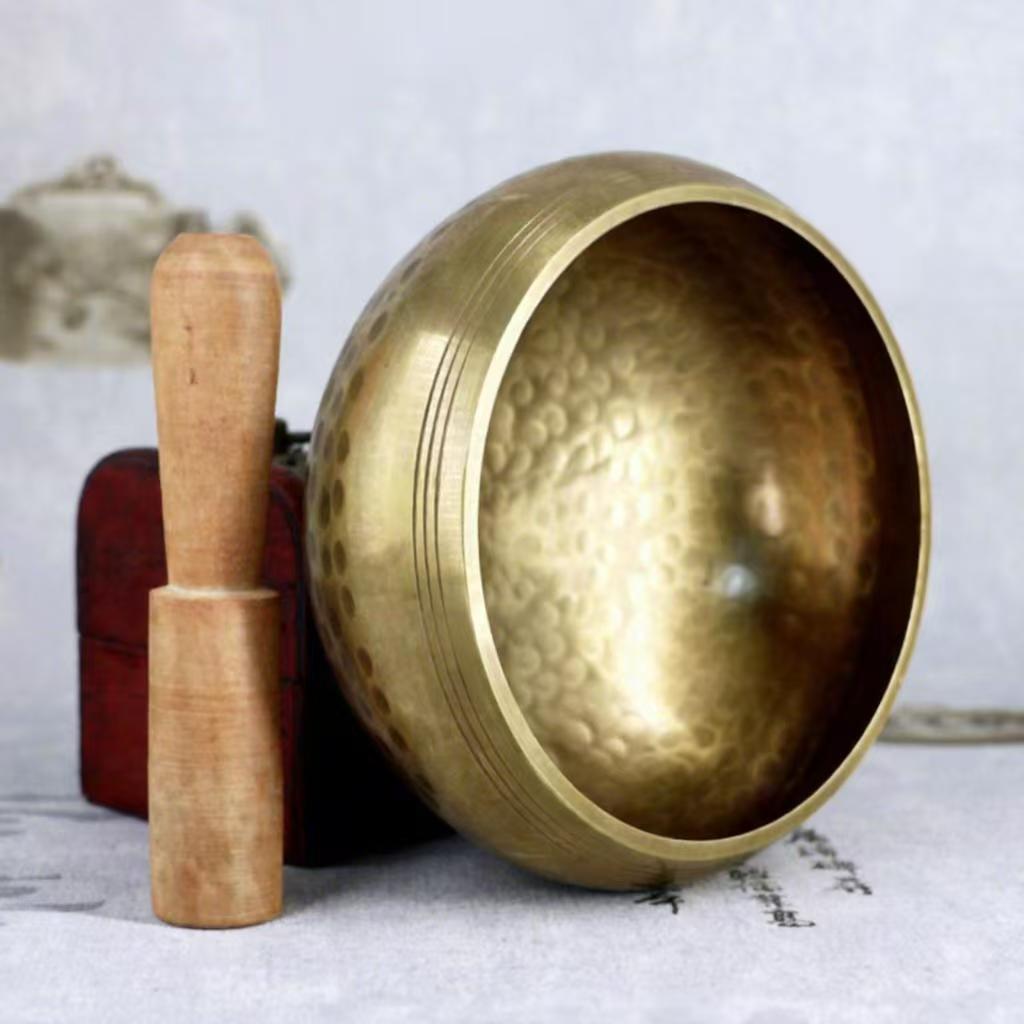



Why does a singing bowl's sound 'stay' in a room?
When a bowl is struck, the sound does not vanish at once. It leaves the bowl's wall, meets the walls, floor and ceiling, and returns to your ears at different times. What we call the 'resonance' is a piece of work completed by the room and the metal together.
A bowl's overtones are not a single frequency but a family of partials that are not perfectly consonant. Between them a slight 'beat' forms — two close frequencies interfering to create a slow swelling and fading. That is why some bowls sound as if they are breathing.
Next time you listen, try not to focus only on the loudest moment. Listen to it grow smaller, notice where it disappears, and hear how the room gives the sound back to you.